
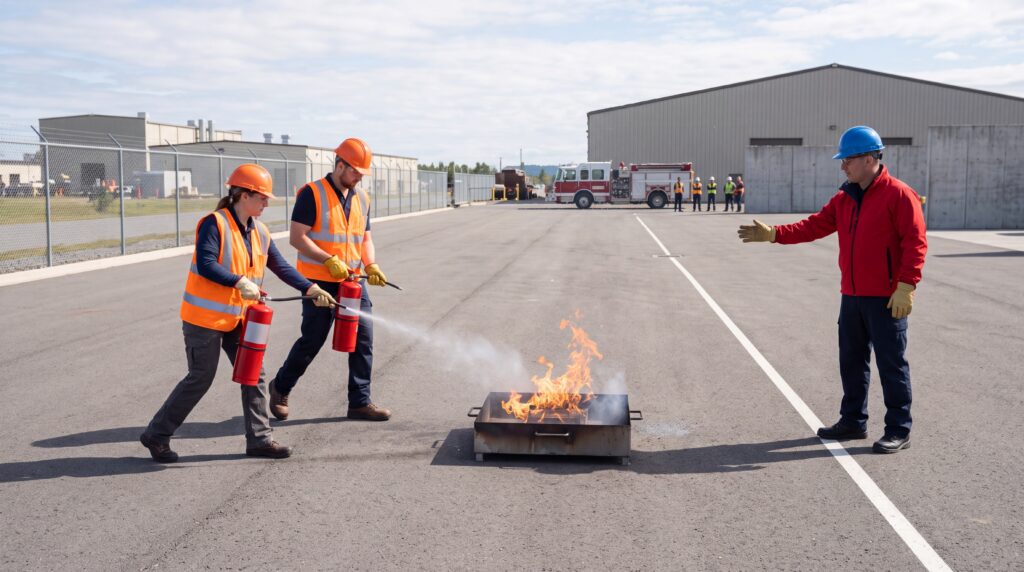
Fire safety training teaches employees to use RACE to respond to a fire and PASS to operate an extinguisher. OSHA requires annual extinguisher training for employees expected to use extinguishers. Fire safety training gives Columbus, Ohio workers a clear plan when seconds count. Many employers own extinguishers but never practice with them. This post explains RACE, PASS, OSHA training rules, and how to build a plan that holds up at inspection.
Key Takeaways
- RACE gives employees four ordered actions: rescue, alarm, contain, and extinguish or evacuate during any workplace fire.
- PASS teaches four extinguisher steps: pull the pin, aim low, squeeze the handle, and sweep side to side.
- OSHA requires employers to train workers on extinguisher use when hired and then every year after that.
- A written plan, hands-on practice, and training records help Columbus businesses stay compliant and ready.
How Columbus Employees Use RACE and PASS During Fire Emergencies
RACE and PASS work together during a workplace fire. RACE guides the overall response, and PASS guides the use of a portable extinguisher. Employees who know both can act quickly and safely.
RACE Gives Employees a Fixed Order of Actions
RACE stands for Rescue, Alarm, Contain, and Extinguish or Evacuate. It gives employees a fixed order of actions so they do not freeze or improvise. Practicing the RACE steps helps employees understand their responsibilities during a fire emergency.
PASS Guides Extinguisher Use With Pull, Aim, Squeeze, and Sweep
PASS stands for Pull, Aim, Squeeze, and Sweep. Employees pull the pin, aim the nozzle at the base of the fire, squeeze the handle, and sweep side to side. Employees should aim at the base of the fire rather than the flames.
Fight a Fire Only When It Is Small and the Exit Is Behind You
An employee should fight a fire only when it is small and the exit is behind them. The alarm must be sounded first, and the extinguisher must suit the fire. If smoke builds or the fire spreads, leaving is the correct choice.
Extinguisher Type Must Match the Fire Class
Different fires need different agents. Class A covers ordinary combustibles, Class B covers flammable liquids, Class C covers energized electrical equipment, and Class K covers cooking oils.
Restaurant kitchens in Columbus often rely on wet chemical suppression systems, so cooks need to know when to use the system instead of a handheld unit.
Rescue Means Helping People in Immediate Danger Without Risk to Yourself
Rescue means helping people in immediate danger without putting yourself at risk. Employees should assist anyone near the fire and guide visitors toward exits. Workers must never re-enter a smoke-filled space to search for others.
The Fire Alarm Alerts Coworkers and the Fire Department
Activating the alarm alerts coworkers and notifies the fire department. Employees should pull the nearest manual station before reaching for an extinguisher.
A monitored fire alarm system can relay that signal to responders, though monitoring depends on how a building is set up.
Containment Limits Oxygen and Smoke by Closing Doors and Windows
Containment means closing doors and windows to limit oxygen and smoke movement. A closed fire door can hold back fire and smoke for a rated period. Propped-open doors defeat that protection, so training should address them directly.
Key Steps for Building an Effective Workplace Fire Safety Training Plan
A strong plan starts with knowing your risks and your legal duties. It then turns those duties into scheduled, documented training. Columbus employers can follow these steps to build a plan that works.
Meet OSHA’s Extinguisher Training Requirements at Hire and Annually
OSHA requires an educational program for employees expected to use portable extinguishers. Training must happen when employees are first hired and at least annually after that.
Employers who expect workers to evacuate only must still provide emergency action plan training under 1910.38.
Schedule Fire Safety Training Every 12 Months
Employees need extinguisher training at hire and once every 12 months. Refresher sessions also make sense after layout changes, new equipment, or a near miss.
Many facility managers schedule training in October during Fire Prevention Month to keep the date consistent.
Train Likely Extinguisher Users First, Then All Other Staff
Start with workers who are likely to use extinguishers, such as kitchen staff, maintenance teams, and shift supervisors. Then train all other staff on RACE, alarms, and exit routes. Designating floor wardens in each area adds accountability.
Include Hands-On Practice With a Real Extinguisher
Hands-on practice builds confidence that slides cannot match. Employees should hold a real extinguisher, locate the pin, and practice the PASS motion with a trained instructor.
Online fire safety training can cover the basics, but it cannot replace handling the equipment.
Document Every Session With Sign-In Sheets, Dates, Topics, and Trainer Names
Keep a sign-in sheet, the date, the topics, and the trainer’s name for every session. Store records where managers can find them quickly. Inspectors and insurance carriers often ask for these files alongside extinguisher inspection tags.
Align Training With Your Inspection Schedule
Training works best when extinguishers, alarms, and suppression systems are also inspected, tested, and maintained. Employees then practice on equipment that is current and in working order. Pairing both tasks reduces downtime and prevents surprise deficiencies.
Support Workplace Fire Safety With Elite Fire Services
Elite Fire Services helps Columbus businesses maintain commercial fire protection equipment through fire extinguisher sales, installation, service, testing, and inspection. Keeping extinguishers properly maintained is an important part of workplace fire safety.
Contact us to discuss your commercial fire protection needs.
Frequently Asked Questions
What is basic fire safety training?
Basic fire safety training teaches employees how to recognize fire hazards, respond to alarms, follow evacuation routes, and understand workplace emergency procedures. It may also cover RACE, PASS, fire extinguisher types, and safe extinguisher use based on employees’ assigned responsibilities.
What are the 5 steps of fire safety?
A general five-step fire safety approach includes prevention, detection, alarm activation, containment, and evacuation or extinguishment when safe. These steps support workplace preparedness but are not a universal OSHA-mandated sequence. Employees should follow their workplace emergency action plan.
How do you get fire safety certified?
Employees complete a fire safety course, either in person or online, and receive a certificate of completion. Employers should add hands-on extinguisher practice and keep records, since OSHA does not issue individual fire extinguisher certifications.
Is online fire safety training enough for OSHA compliance?
Online fire safety training may satisfy applicable OSHA educational requirements when it effectively covers the required information. Designated employees must receive appropriate training in firefighting equipment use. Hands-on practice is recommended, although OSHA does not universally require live-fire extinguisher exercises.