
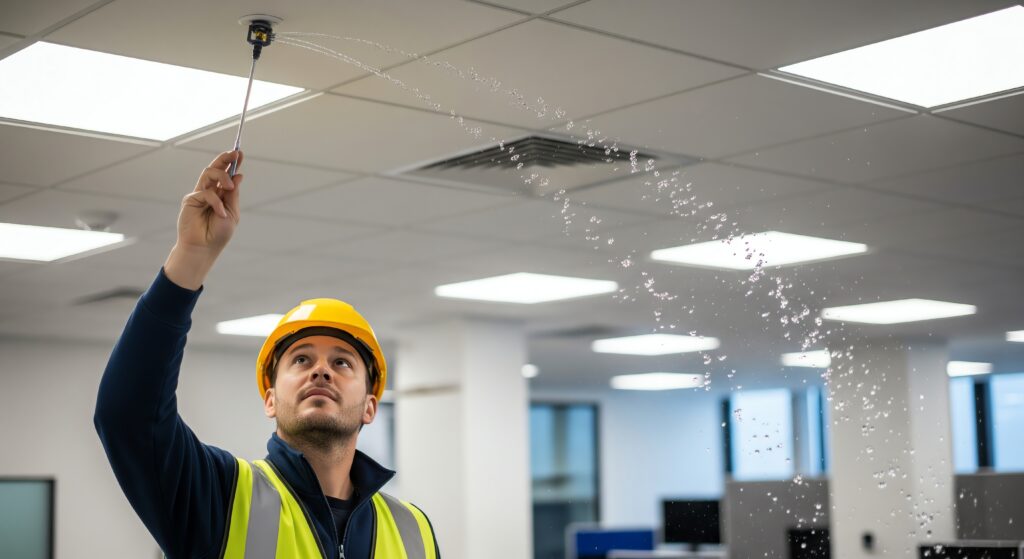
At Elite Fire Services, we help commercial property owners and facility managers across Cincinnati and the greater Cincinnati area stay ahead of NFPA 25 inspection requirements. We provide structured scheduling, detailed reporting, and direct coordination with local Authorities Having Jurisdiction.
Understanding how Ohio enforces sprinkler inspection, testing, and impairment rules is critical to protecting your building and maintaining full compliance.
Key Takeaways
- Ohio commercial buildings must follow NFPA 25 inspection and testing intervals ranging from weekly valve checks to comprehensive 5-year internal inspections.
- The 5-year fire sprinkler inspection requires internal obstruction investigations and valve inspections beyond the standard annual review.
- When a sprinkler system is taken out of service, formal NFPA 25 impairment procedures, including fire-watch protocols and AHJ notification, are required.
- Inspection documentation, tagging, and deficiency tracking are routinely reviewed by Cincinnati-area fire marshals and must be maintained on-site.
- Proactive scheduling aligned with local AHJ review cycles helps prevent violations, costly corrections, and operational disruptions.
Understanding Ohio Fire Sprinkler Inspection Intervals
Ohio follows the inspection and testing intervals outlined in NFPA 25 for commercial sprinkler systems. These intervals vary by system type and component. They directly influence how property managers schedule fire protection services across a facility portfolio throughout our service area.
Weekly and Monthly Component Checks
Under NFPA 25, certain system components require frequent checks that many Cincinnati commercial buildings overlook. Reduced-pressure backflow preventers must be checked weekly.
Control valves must be inspected monthly if locked open, or quarterly if electronically supervised. These inspections must be documented and retained on-site for review by the Cincinnati Fire Department or other local AHJs.
Even when equipment is fully operational, missing documentation for short-interval checks is considered a compliance deficiency.
Annual Inspection Scope for Commercial Buildings
An annual fire sprinkler inspection includes a visual assessment of sprinkler heads, branch lines, hangers, bracing, alarm devices, and valves. Technicians verify waterflow alarm activation and conduct a main drain test.
Results are compared to prior baseline readings in accordance with the NFSA documentation and owner record-retention guidance for fire protection systems. Fire protection systems must be inspected, tested, and maintained in an operable condition. Records must be retained and made available to the authority having jurisdiction.
Annual inspection tags document technician certification, test results, and identified deficiencies. In Hamilton County and surrounding jurisdictions, fire marshals routinely request the most recent inspection report during occupancy reviews.
The 3-Year and 5-Year Milestones
Dry-pipe and preaction systems require a full trip test every three years. This verifies proper valve operation and confirms water delivery timing.
At the five-year mark, NFPA 25 mandates an internal obstruction investigation of system piping. It also requires inspection of valve interiors and gauge calibration verification.
Many older commercial buildings in Queensgate or Camp Washington encounter corrosion or scale buildup during this milestone inspection. Planning for water discharge, temporary impairment, and post-test cleanup reduces operational disruption.
Compliance Planning and Deficiency Management
Inspection compliance requires more than completing the service visit. Documentation, coordination, and follow-up determine whether a building remains in good standing with the AHJ.
Managing Impairments the Right Way
When a sprinkler system is shut down for repairs, testing, or upgrades, NFPA 25 Chapter 15 impairment procedures apply. The building’s impairment coordinator must be notified before the shutdown.
Tags must be posted at affected valves and fire department connections. Local fire authorities must be contacted when required, consistent with the Ohio Fire Code.
For occupied Cincinnati commercial properties, a documented fire watch must be established until the system is restored. Undocumented impairments discovered during a fire marshal inspection can result in significant penalties.
Organizing Inspection Reports and Tags
Inspection reports should be maintained for at least five years. Organize them by type, including quarterly, annual, 3-year, and 5-year inspections. During routine inspections, local officials often review the sprinkler riser tag first.
Tags must display the inspection date, company name, and technician identification. Missing or outdated tags are cited violations, regardless of overall system condition.
Tracking and Closing Deficiencies
NFPA 25 distinguishes between impairments and deficiencies. Impairments require immediate correction. Deficiencies must be corrected within the timeframe specified in the inspection report. Cincinnati-area AHJs expect written confirmation when deficiencies are resolved.
A centralized tracking log helps ensure corrective actions are completed and properly documented.
Schedule Your Fire Sprinkler Inspection in Cincinnati
Commercial buildings in Cincinnati and throughout Ohio must comply with a layered NFPA 25 schedule. This includes frequent checks, annual inspections, and major 5-year milestones.
Elite Fire Services provides fire sprinkler inspection, testing, and maintenance with NICET-certified technicians and 24-hour emergency service support. If your property is due for inspection or approaching a milestone requirement, contact us to schedule service and maintain compliance.
Frequently Asked Questions
What does a fire sprinkler inspection consist of?
A fire sprinkler inspection includes a visual review of sprinkler heads, piping, valves, and alarm devices. Technicians test waterflow alarms, perform a main drain test, and document findings in a written report.
How often should a fire sprinkler be inspected?
NFPA 25 requires annual visual inspections at a minimum. Certain components require weekly, monthly, or quarterly checks. A comprehensive internal inspection is required every five years.
What are the 4 types of fire sprinkler inspections?
The four primary inspection types are visual inspection, functional testing, internal inspection, and maintenance assessment. Each applies to different components and occurs at defined intervals.
What does a 5-year sprinkler inspection consist of?
A 5-year inspection includes an internal obstruction investigation of piping, inspection of valve bodies, gauge verification, and a compliance review of system components.