
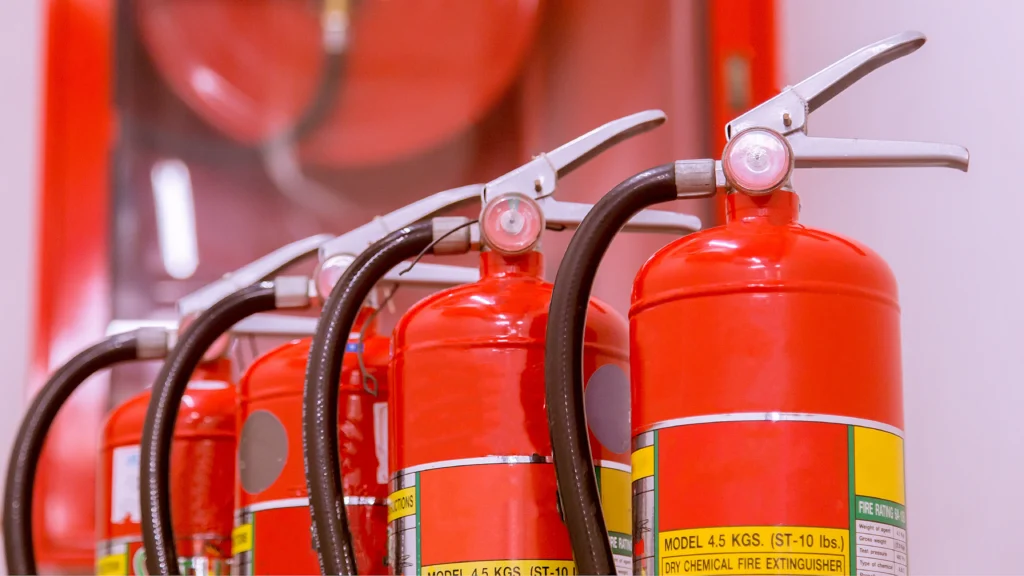
For Ohio businesses, knowing when to recharge or replace a fire extinguisher helps keep critical safety equipment ready. Elite Fire Services supports commercial facilities in Columbus, Cincinnati, Dayton, Circleville, and surrounding Ohio markets with fire extinguisher inspection, maintenance, repair, and replacement services.
Key Takeaways
- Pressure problems, physical damage, corrosion, or a missing tamper seal can indicate that a fire extinguisher needs service.
- Fire extinguishers should be evaluated after any discharge, even when only a small amount of agent was released.
- Maintenance and hydrostatic testing intervals depend on the extinguisher type, agent, cylinder, and applicable requirements.
- Replacement may be necessary when an extinguisher fails testing, has significant damage, or cannot be safely serviced.
- Accurate service records help Ohio businesses track fire extinguisher maintenance and prepare for upcoming inspection requirements.
How Ohio Businesses Can Spot Extinguishers That Need Attention
Routine visual checks can help facility teams identify problems between scheduled professional inspections. Businesses reviewing their broader fire protection services can include extinguisher conditions in regular facility-safety checks. These warning signs do not always require replacement, but they can indicate that professional service is necessary.
Spot Pressure Outside the Operating Range
For extinguishers equipped with pressure gauges, check whether the needle remains within the indicated operating range. The OSHA portable fire extinguisher guidance includes gauge condition among the items checked during routine inspections. A reading outside the proper range can indicate a pressure problem requiring professional attention.
Look for Visible Cylinder Damage
Dents, deep scratches, punctures, heat damage, or other visible cylinder problems should not be ignored. A fire extinguisher is a pressurized vessel, so questionable cylinder conditions require careful evaluation. A qualified fire-protection professional can determine whether additional maintenance or testing is necessary before returning the extinguisher to service.
Check for Missing or Outdated Service Records
The service tag provides a useful record of previous inspection or maintenance activity. Facility teams should review this information during routine checks. Missing, damaged, unclear, or outdated documentation can indicate that professional attention is needed. For covered workplaces, OSHA requires annual maintenance checks and records of the maintenance date.
Watch for a Broken or Missing Tamper Seal
A broken or missing tamper seal can indicate that an extinguisher was handled or potentially used. It does not automatically confirm pressure loss or discharge. However, it provides a clear reason to inspect the extinguisher carefully. The pin, seal, hose, gauge, cylinder, and other accessible components should remain in serviceable condition.
Identify Extinguishers Due for Six-Year Maintenance
Certain rechargeable stored-pressure extinguishers require internal maintenance at specified intervals. Some dry-chemical extinguishers have a six-year internal maintenance interval. The requirement does not apply universally to every extinguisher.
The NFPA 10 standard for portable fire extinguishers provides requirements addressing portable fire extinguisher inspection, maintenance, recharging, and testing.
Identify Extinguishers Due for Hydrostatic Testing
Some extinguisher cylinders have a 12-year hydrostatic testing interval, while others require testing more frequently. OSHA identifies hydrostatic testing intervals of five or 12 years, depending on extinguisher type.
Businesses should confirm the correct schedule for each unit rather than assuming every extinguisher follows the same testing cycle.
Identify Corrosion Around the Cylinder or Valve
Rust or corrosion on the cylinder, valve, handle, or other components deserves prompt attention. Corrosion can affect an extinguisher’s condition and may indicate a need for further evaluation. Significant corrosion or mechanical damage can also affect whether an extinguisher remains suitable for continued service or requires additional testing.
Service, Recharge, and Replacement Decisions to Make Next
Once a problem is identified, the appropriate response depends on the extinguisher’s condition and service history. Recharge, maintenance, testing, and replacement are separate decisions. A qualified technician can determine which action is appropriate for the specific extinguisher.
Recharge After Any Use, Even Partial
After an extinguisher has been discharged, even briefly, remove it from normal service for professional evaluation. Rechargeable extinguishers generally require servicing after use. A technician can inspect the unit, recharge it when appropriate, and verify its condition before returning it to its designated location.
Replace Instead of Recharge When the Cylinder Fails Testing
An extinguisher that fails required hydrostatic testing should not simply be recharged and returned to service. OSHA’s hydrostatic testing requirements address pressure testing for leaks and structural flaws. Extinguisher cylinders that fail required hydrostatic testing must be removed from service.
Decide Based on Extinguisher Type and Age
Age alone does not determine when a fire extinguisher should be replaced. Extinguisher type, manufacturer instructions, cylinder condition, maintenance history, testing requirements, and rechargeability all influence the decision. Facility managers should evaluate these factors together instead of replacing or retaining equipment based solely on its manufacture date.
Weigh the Cost of Ongoing Recharge Against Replacement
A rechargeable fire extinguisher can often remain in service through proper maintenance. However, repeated repairs or deteriorating components can make replacement more practical.
A fire-protection professional can review the unit’s condition, maintenance requirements, testing history, and available replacement options before recommending the appropriate next step.
Know What Happens When You Fall Out of Compliance
Overdue maintenance, incomplete records, damaged equipment, or inoperable extinguishers can create problems during facility inspections. More importantly, compromised equipment may not provide dependable first-response protection during a fire. Workplace extinguishers should remain fully charged, operable, accessible, and properly maintained according to applicable requirements.
Plan Around September Inspection and Budget Cycles
September can provide a practical planning point for Ohio facility teams preparing for fall and year-end maintenance. Reviewing service records early can reveal upcoming inspection, maintenance, testing, or replacement needs.
Businesses managing multiple properties can also review Elite Fire Services locations when coordinating fire extinguisher maintenance across supported Ohio markets.
Document Every Service Action for Insurance and AHJ Records
Keep organized records whenever an extinguisher is inspected, maintained, recharged, tested, or replaced. Accurate documentation helps facility managers track service history and upcoming maintenance requirements. It can also provide useful records when information is requested by an authority having jurisdiction, insurer, safety professional, or facility-management team.
Get Your Fire Extinguishers Inspected Before Fall Compliance Checks
If your Ohio facility has extinguishers with questionable pressure, damaged components, missing service information, or uncertain maintenance histories, Elite Fire Services can help determine the appropriate next step. Our team supports commercial fire extinguisher inspection, maintenance, repair, and replacement needs across key Ohio markets.
Contact us to request service and have an Elite Fire Services specialist get back to you as soon as possible.
Frequently Asked Questions
These common questions can help facility teams identify when a fire extinguisher needs attention. The correct service schedule can vary by extinguisher type, condition, manufacturer instructions, and applicable fire-protection requirements.
How often do fire extinguishers need service in Ohio?
Commercial fire extinguishers should receive routine visual inspections and required professional maintenance. For covered workplaces, OSHA requires monthly visual inspections and annual maintenance checks. Additional maintenance and hydrostatic testing intervals depend on the extinguisher type.
How do I know if a fire extinguisher is still good?
Check the pressure indicator, tamper seal, service tag, hose, handle, valve, and cylinder for visible problems. Damage, corrosion, questionable pressure, missing documentation, or evidence of discharge can indicate that professional fire extinguisher service is needed.
What should I do after using a fire extinguisher?
Remove the extinguisher from normal service after any discharge and arrange professional evaluation. A qualified technician can determine whether the extinguisher requires recharging, additional maintenance, testing, or replacement before it is returned to service.
When should a fire extinguisher be replaced instead of recharged?
Replacement may be necessary when an extinguisher fails required testing, has significant cylinder damage or corrosion, cannot be safely serviced, or is nonrechargeable. A qualified technician should evaluate the specific unit before it returns to service.