Commercial buildings face different fire hazards depending on their operations, equipment, and stored materials. A fire suppression system detects or responds to fires and releases an appropriate extinguishing agent.
This guide compares five suppression options used for specialized commercial fire risks. These include halocarbon clean agents, wet chemicals, dry chemicals, inert gases, and foam.
Key Takeaways
- Five suppression system types address cooking fires, sensitive electronics, industrial equipment, and flammable liquid hazards.
- Fire sprinklers provide broad building protection, while specialized suppression systems target specific fire risks.
- Choosing the right system requires evaluating fire hazards, building operations, applicable codes, and cleanup needs.
- Installation costs, ongoing maintenance, and potential downtime should influence long-term fire protection decisions.
- Qualified professionals help ensure proper system selection, installation, inspection, testing, and code compliance.
Comparing Fire Suppression System Types for Columbus Commercial Properties
No single suppression system works equally well for every commercial fire hazard. The appropriate agent depends on the burning material and the protected environment. Some agents leave residue, while others require carefully designed room enclosures.
Clean Agent Suppression
Halocarbon clean agent systems extinguish fires without leaving residue that could damage sensitive equipment. These systems are suitable for server rooms, electrical spaces, and telecommunications facilities.
FM-200 is a common halocarbon agent used in these applications. System design must consider room integrity, occupant safety, and NFPA 2001 requirements.
Wet Chemical Suppression
Wet chemical systems protect commercial kitchens from fires involving cooking oils and grease. Nozzles discharge a chemical agent onto equipment such as fryers, grills, and cooking surfaces, cooling the fire and helping prevent re-ignition.
ANSUL is a manufacturer of kitchen suppression systems, while wet chemical refers to the suppression agent. System design must account for cooking equipment, hood layout, and applicable NFPA 96 requirements.
Dry Chemical Fire Suppression
Dry chemical systems release a powder that interrupts combustion. They are commonly used for industrial equipment, paint booths, and certain flammable liquid hazards.
These systems provide targeted fire protection but leave powder residue that requires cleanup. The appropriate agent depends on the fire hazard, equipment, and surrounding environment.
Inert Gas Suppression
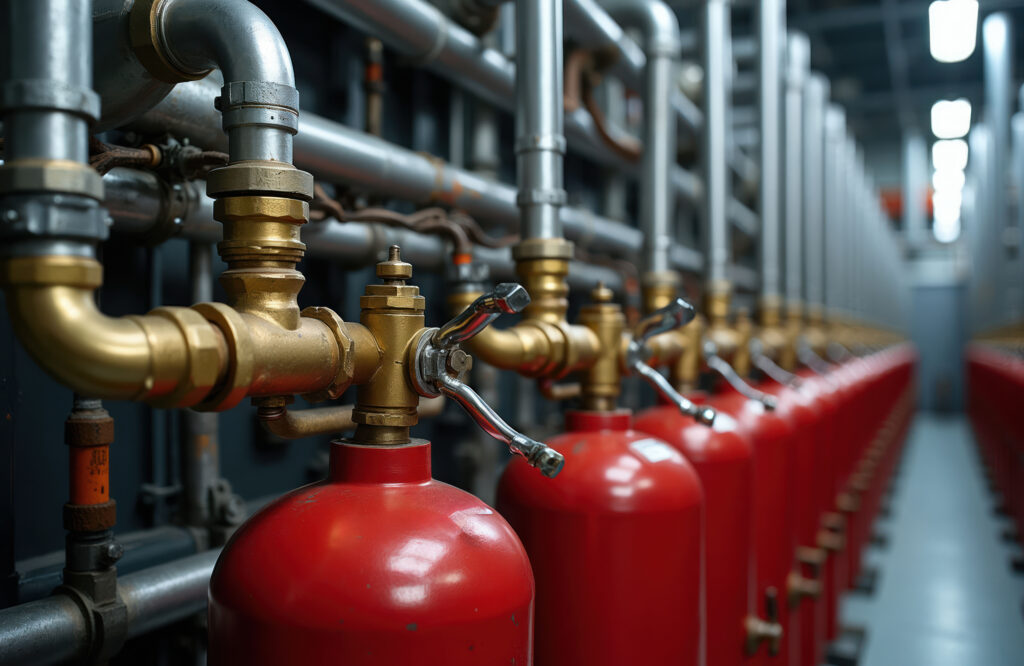
Inert gas systems use nitrogen, argon, or approved gas blends to reduce oxygen levels and suppress fires. They are suitable for certain data centers, control rooms, and records storage areas because they leave no residue.
Proper design must consider room integrity, cylinder storage, discharge pressure, and occupant safety. Inert gas systems are also covered under NFPA 2001.
Foam Suppression
Foam suppression systems protect against certain flammable and combustible liquid fires. The foam forms a blanket over the fuel surface, helping prevent flammable vapors from feeding the fire.
Common applications include fuel storage areas, loading facilities, and certain aircraft hangars. System selection must consider fuel type, environmental restrictions, and foam containment requirements.
How Do Suppression Systems Differ From Fire Sprinklers?
Fire sprinklers typically release water when individual sprinkler heads detect sufficient heat. They provide general building fire protection. Special hazard suppression systems use agents designed for specific risks, such as wet chemicals for commercial kitchens or clean agents for server rooms.
Many Columbus commercial buildings require both systems. Local fire codes and the authority having jurisdiction determine the appropriate protection requirements.
How to Choose the Right Fire Suppression System
Selecting a system begins with understanding the hazards present throughout your commercial property. These steps can help owners prepare for discussions with qualified fire protection professionals.
Identify the Fire Hazards
List the combustible materials, equipment, and activities inside each protected space. Cooking oils, electrical equipment, industrial coatings, and stored fuels present different hazards. The suppression agent must suit the expected fire and surrounding conditions.
Confirm Applicable Fire Code Requirements
Discuss the project with qualified designers and the local authority having jurisdiction. Applicable requirements depend on building occupancy, hazard classification, and the proposed system. The authority reviews and approves work according to its applicable procedures.
Consider Cleanup and Operational Downtime
Agent discharge can affect equipment, employees, and business operations differently. Dry chemical powder generally requires cleanup, while gaseous agents leave no residue.
Enclosed systems may require additional room preparation and integrity testing. Occupant notification, evacuation procedures, and other safety measures also require attention.
Compare Total Project Costs
Installation cost depends on coverage area, agent choice, detection, piping, and site conditions. Maintenance, inspections, replacement components, and potential cleanup also affect long-term expenses. Request written proposals that explain equipment, installation work, and ongoing service requirements.
Match Coverage to Building Operations
Consider how daily operations affect equipment placement and suppression system access. Kitchen renovations may change appliance arrangements and require a system coverage review. Server room expansions may introduce new equipment or alter protected enclosure conditions.
Choose a Qualified Service Provider
Look for relevant system experience, manufacturer training, and appropriate technical qualifications. Confirm the provider supports installation, inspection, testing, maintenance, and necessary repairs. Ask how service schedules and emergency response are handled after installation.
Talk With a Columbus Fire Protection Team Today
Your building’s equipment, operations, and code requirements should guide the final decision. Elite Fire Services supports commercial customers with fire protection installation, inspection, testing, and maintenance.
Its offerings include kitchen suppression, engineered systems, paint booth suppression, and related equipment.
Contact us to discuss the protection needs of your Columbus commercial property.
Frequently Asked Questions
How Much Does a Fire Suppression System Cost?
Fire suppression system costs depend on the system type, protected area, equipment, and installation complexity. Larger facilities or specialized hazards may require additional components. A professional site assessment provides an accurate estimate based on your building’s needs.
Can I Install My Own Fire Suppression System?
No, commercial fire suppression systems should be installed by qualified professionals. Proper installation requires specialized knowledge, approved equipment, and compliance with applicable fire codes. Professional installation helps ensure reliable operation and occupant safety.
Do Special Hazard Systems Replace Fire Sprinklers?
Not always. Special hazard suppression systems protect specific equipment or high-risk areas, while fire sprinklers provide broader building protection. Depending on fire codes and building requirements, both systems may be necessary for adequate fire protection.
What Are the Basic Stages of Automatic Fire Suppression?
Automatic fire suppression systems typically operate in three stages: detection, activation, and discharge. Sensors identify fire conditions, the control system activates, and the suppression agent is released to control or extinguish the fire.