
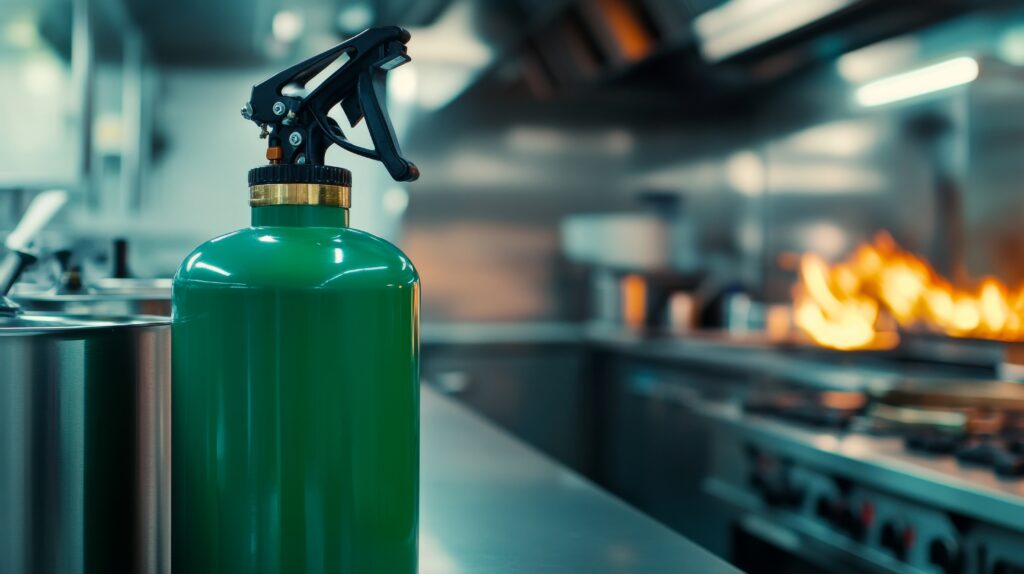
A Class K fire extinguisher is designed for fires involving cooking oils, grease, and animal fats commonly found in commercial kitchen equipment. These fires burn at extremely high temperatures and behave differently than standard combustible fires, making them more difficult to control with standard general-purpose extinguishers. Across Ohio, from Columbus restaurants to Cincinnati food trucks, this specialized protection plays a critical role in reducing risk to staff and property in commercial kitchens.
Key Takeaways
- Class K fire extinguishers are built specifically for grease and cooking oil fires.
- Wet chemical agents cool and smother fires that ABC extinguishers cannot safely handle.
- Ohio commercial kitchens using fryers or grills are required to have Class K fire extinguishers.
- Proper placement and regular inspection ensure readiness during emergencies.
How Class K Extinguishers Protect Ohio Commercial Kitchens From Grease Fires
Commercial kitchens operate in a high-risk environment where cooking oils and grease can ignite quickly under high heat. These fires behave differently than standard fires, often spreading rapidly if handled incorrectly. Class K extinguishers are specifically designed to control these hazards safely and effectively.
What Makes a Class K Fire Different From Other Fires
A Class K fire involves burning cooking oils, animal fats, or grease used in commercial food preparation. These fuels reach higher temperatures than typical combustibles like paper or wood. Using the wrong extinguishing method can cause the burning oil to splash and spread, increasing the danger.
How the Wet Chemical Agent Works
Class K extinguishers use a potassium acetate-based wet chemical agent. When applied to hot oil, the agent creates a foam layer through a process called saponification. This layer cools the fire and seals the surface, preventing oxygen from feeding the flames and reducing the chance of reignition.
Why Standard ABC Extinguishers Fall Short in Kitchens
ABC extinguishers rely on dry chemical agents designed for general fires. In a grease fire, this powder can scatter burning oil rather than contain it. This is why kitchens with fryers or grease-producing equipment require a Class K solution instead of relying on general-purpose extinguishers.
Unlike wet chemical extinguishers, ABC extinguishers do not create a cooling seal over the oil, which increases the risk of splashing and spreading the fire.
Key Compliance Steps for Choosing and Maintaining the Right Protection
Meeting fire code requirements involves more than installing the correct extinguisher. Ohio kitchen operators must ensure their equipment is properly sized, maintained, and ready for inspection at any time. Consistent upkeep and staff readiness are essential for both compliance and safety.
Which Kitchens Are Required to Have Class K Extinguishers
Commercial kitchens that use grease-producing equipment such as deep fryers, griddles, and other high-temperature cooking appliances are required to have Class K fire extinguishers under NFPA-aligned fire codes. These requirements apply to restaurants, catering operations, institutional kitchens, and food trucks operating throughout Ohio.
The presence of cooking oils and fats creates a higher fire risk that cannot be safely addressed with general-purpose extinguishers.
Proper Placement and Access Requirements
Class K extinguishers must be installed in locations that allow quick and safe access during a fire. Units should be positioned within reach of cooking equipment but not so close that staff must move through active flames to access them. Clear visibility, unobstructed paths, and proper mounting height all contribute to faster response times and safer use during an emergency.
How Class K Extinguishers Work with Hood Suppression Systems
Kitchen hood suppression systems provide automatic fire protection above cooking equipment, activating when high heat or flames are detected. Class K extinguishers serve as a critical backup when manual intervention is needed or when a fire spreads beyond the hood system’s coverage area. Together, these systems create layered protection for commercial kitchen environments.
Sizing and Coverage for Different Kitchen Setups
A 6-liter Class K extinguisher is the standard size for most commercial kitchens. Larger kitchens with multiple cooking stations may require additional units to ensure full coverage and compliance. Food trucks and smaller operations typically use the same size extinguisher due to space limitations, but placement remains just as important for effective protection.
Where Class K Extinguishers Can and Cannot Be Used
Class K extinguishers are designed specifically for fires involving cooking oils, grease, and animal fats. While they may be effective on limited Class A fires, they are not intended for electrical fires or flammable liquid hazards outside of cooking environments. Using the correct extinguisher type is essential to avoid worsening the fire or creating additional hazards.
Inspection, Maintenance, and Compliance Requirements
Commercial kitchens must maintain fire extinguishers through routine inspections and professional servicing. Units must remain fully charged, properly tagged, and accessible at all times. Selecting UL-listed Class K extinguishers ensures compliance with recognized safety standards and compatibility with modern commercial cooking hazards. Regular maintenance helps identify issues early and ensures equipment performs correctly when needed.
Training Staff to Respond to Grease Fires
Staff training is essential for effective fire response. Employees should understand how to identify a grease fire and use a Class K extinguisher correctly by aiming at the base of the flames and applying the wet chemical agent evenly. Ongoing training reinforces proper response procedures and improves confidence during high-pressure situations.
Identifying the Correct Extinguisher During an Emergency
The Class K label clearly identifies the extinguisher as suitable for cooking oil and grease fires. In an emergency, this allows staff to quickly select the correct unit without hesitation. Using the wrong extinguisher can spread burning oil and increase the severity of the fire, making proper identification critical.
Protect Your Ohio Kitchen With the Right Fire Suppression Plan
Grease fires escalate quickly, and having the correct protection in place makes a measurable difference. Elite Fire Services works with commercial kitchens across Columbus and the greater Cincinnati area to support fire protection planning, inspections, and suppression system readiness. If your facility needs a review of its current fire protection coverage, contact us to get started.
Frequently Asked Questions
What is the difference between a Class B and Class K fire?
Class B fires involve flammable liquids like gasoline or solvents. Class K fires involve cooking oils and grease in commercial kitchen equipment, requiring a different extinguishing method.
What is a Type K fire extinguisher?
A Type K, or Class K, extinguisher uses a wet chemical agent to cool and suppress grease fires. It is specifically designed for commercial cooking environments.
What is the best extinguisher for a Class K fire?
A UL-listed Class K wet chemical extinguisher is the correct choice. It creates a cooling foam layer that prevents reignition of hot cooking oil.
Are Class K extinguishers safe for home use?
Class K extinguishers are intended for commercial kitchens with high heat cooking equipment. Most residential kitchens rely on multi-purpose extinguishers unless specialized equipment is present.