
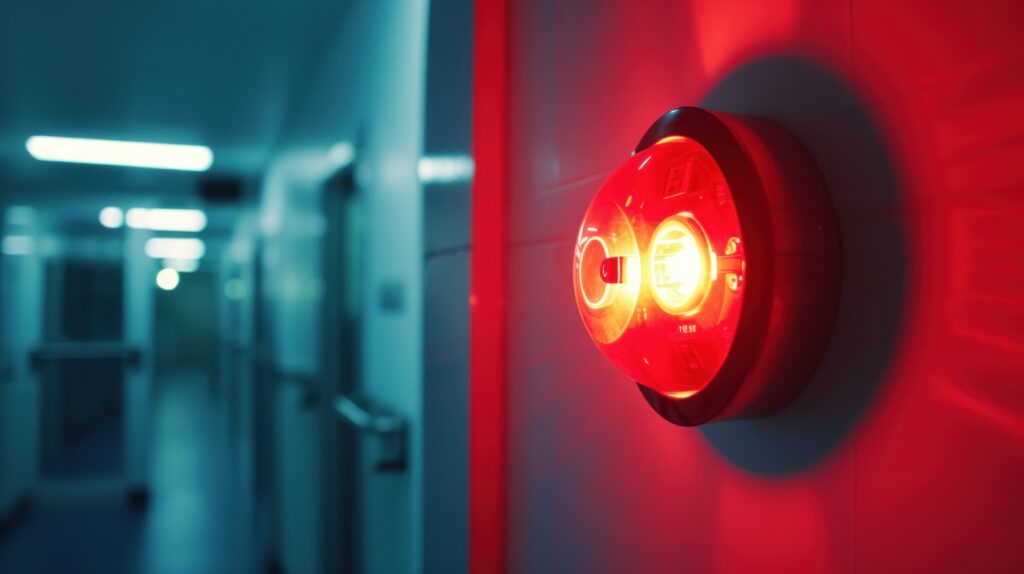
In the Dallas-Fort Worth Metro, a commercial fire alarm keeps going off for specific, traceable reasons that facilities teams encounter across office buildings, warehouses, and multi-tenant properties. From a service provider perspective, these patterns point to maintenance gaps, environmental conditions, or system faults that should be addressed before they impact safety or compliance.
Key Takeaways
- A commercial fire alarm keeps going off in Texas most often due to low batteries, dust buildup, or system trouble signals rather than active fire conditions.
- Repeated false fire alarm activations are commonly tied to airflow, heat, or construction dust in large facilities.
- Fire alarm trouble signals indicate underlying system faults that should not be ignored or silenced without investigation.
- When basic troubleshooting steps fail, the issue typically requires a technician to inspect, test, and repair the system.
Common Fire Alarm Triggers and When They Signal a Bigger Issue
Recurring alarm activity usually follows clear patterns in commercial systems. Identifying the trigger early allows facilities teams to decide whether the issue can be handled internally or requires support from a provider offering fire protection services. In large Dallas-Fort Worth properties, these patterns repeat across distribution centers, office campuses, and mixed-use developments.
Low Battery Chirps on Standalone Units
A single chirp every 30 to 60 seconds in a commercial building usually indicates a low battery in a detector or auxiliary device. In multi-floor facilities, these devices are often installed above drop ceilings or inside mechanical rooms, which makes them easy to overlook until tenants report the sound. Elevated temperatures in ceiling cavities can shorten battery life, which causes earlier failure even when replacement schedules are followed.
Dust and Debris Inside the Sensor Chamber
Dust buildup inside smoke detectors is a leading cause of repeated fire alarm activations in commercial spaces. In the Dallas-Fort Worth Metro, facilities near construction zones, highways, or industrial sites often experience higher airborne particulate levels. These particles scatter light inside photoelectric sensors and create conditions that mimic smoke. Guidance from the National Fire Protection Association supports routine inspection and cleaning to reduce these nuisance activations.
Trouble Signals From the Fire Alarm Control Panel
A fire alarm control panel that displays a trouble condition indicates a system fault such as a ground fault, open circuit, or communication issue. These alerts should not be treated as minor warnings. In larger buildings, a single device fault can affect an entire zone, which makes it critical to review panel logs before resetting. Industry requirements in NFPA 72 outline how systems must be tested and maintained to remain compliant.
How to Decide the Right Next Step for Texas Facilities
Once the cause is identified, the next step is deciding whether the issue can be resolved internally or requires professional service. Facilities across North Texas often rely on in-house teams for initial troubleshooting, but knowing when to escalate prevents extended downtime and repeated disruptions.
Confirm Whether the Sound Is a Chirp or an Alarm
Facilities teams should first determine whether the system is producing a single chirp or a repeating alarm pattern. A chirp usually signals a maintenance issue such as a low battery, while a repeating three-beep cycle indicates a potential smoke or heat condition. Misidentifying this pattern can delay response actions or create unnecessary disruption in occupied spaces.
Review the Fire Alarm Panel for Fault Codes
The fire alarm panel provides diagnostic codes that identify the affected zone or device. Recording these codes before resetting the system helps isolate recurring issues and improves repair efficiency. In large campuses or multi-tenant buildings, this step reduces time spent locating faults and limits unnecessary system-wide testing.
Know When Troubleshooting Has Reached Its Limit
If a system continues to beep or activate after battery replacement, cleaning, and resets, the issue likely involves wiring faults or failing components. At this stage, escalation to a provider serving your service locations helps resolve the issue without repeated resets that mask the root cause. Delayed action often leads to more false alarms and increased tenant complaints.
Get Your Fire Alarm System Inspected Today
Persistent alarm issues signal a need for professional attention before they impact operations or compliance. Elite Fire Services provides commercial fire alarm inspection, testing, and repair.
If your system keeps going off, contact us to schedule a professional evaluation.
Frequently Asked Questions
How do you stop a commercial fire alarm from beeping?
Stopping a commercial fire alarm requires identifying whether the issue is a low battery, contamination, or a system fault. Replace batteries and clean devices first, but persistent issues require professional inspection to resolve the underlying problem.
Why does my commercial fire alarm keep going off in Texas?
A commercial fire alarm keeps going off in Texas due to heat, dust, humidity, or aging components. Large facilities often experience repeated activations when sensors are exposed to environmental conditions without consistent maintenance and scheduled inspections.
What are fire alarm trouble signals?
Fire alarm trouble signals indicate system issues such as wiring faults, device failures, or communication problems. These alerts appear on the control panel and mean the system may not function correctly during an emergency if the issue is not resolved.
When should I call a fire alarm technician?
You should call a technician when alarms persist after troubleshooting, when trouble codes continue to appear, or when the system is due for inspection. Professional diagnostics help identify faults and restore proper system operation.
How often should commercial fire alarm systems be inspected?
Commercial fire alarm systems should be inspected according to NFPA 72 requirements, which typically include annual testing and periodic checks. Regular inspections help identify issues early and ensure the system operates properly when it is needed.